



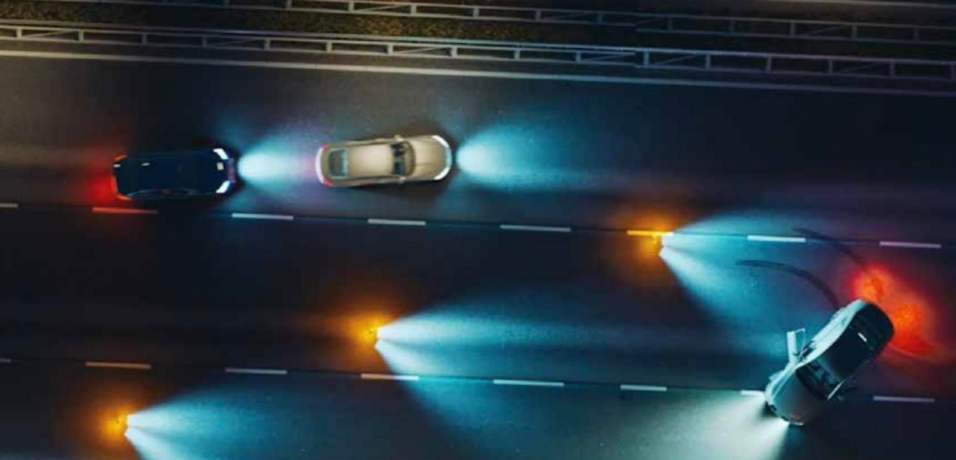
🇬🇧 The road that makes itself safe on its own Flash LED is the drone-rover system from A35 Brebemi and Ali.V.In. that positions itself on the carriageway, with the ability to communicate in real time with navigation apps and V2X systems. Awarded at the Asecap Days 2026, and already covered by a patent application, it improves safety conditions during the initial response. In every story of technological progress, there comes a moment when the observer realises they’re already behind the very thing they’re watching, and all that remains is the consolation — by no means a small one — of being able, at least, to recount that lateness. The writer had seen it in Bratislava, at the Asecap Days 2026, where «leStrade» attended as the event’s media partner and where the project received its award. The engineers who developed it, speaking about it again, now refer to it as “the old version”: a way of saying, without beating about the bush, that what’s described on these pages is a significant evolution of what appeared on the awards stage. In the meantime, while the observer remained fixed on the impression formed in Bratislava, the device had continued to change — quietly — as carefully made things do. Behind this evolution lie three years of joint work between two companies, A35 Brebemi and AII.V.In. (an engineering firm that designs and builds special-purpose vehicles for managing road infrastructure and mobility, nationally and internationally), two patent filings, the use of a test track Brebemi already owned for other purposes — the Arena del Futuro — and the Road Police’s involvement, far from merely nominal. That project has a clear name — Flash LED — and two signatories: A35 Brebemi-Aleatica, the concessionaire that manages the direct motorway link between Brescia and Milan, and AII.V.In. Together they are bringing to the motorway a technology designed to make lane closure operations more effective in the event of an accident or a breakdown. The system, honoured this year at the Asecap Days in Bratislava with the Innovation Challenge for the project “Rover I Flash LED”, is the outcome of a collaboration launched in 2023, also involving the Road Police, and is now protected by a patent filed in Italy in December 2024 and by a corresponding international patent application filed in December 2025. The patent is jointly owned, in equal shares, by A35 Brebemi (50%) and AII.V.In. (50%); the inventors are Righetti, Coffinardi and Mastroviti. To retrace the system’s origins, operation and future prospects, «leStrade» interviewed Giuseppe Mastroviti, Technical and Operations Director at A35 Brebemi, and Giuseppe Celia Magno, Chief Executive Officer of AII.V.In., gathering the perspective of both project partners. “With this project,” Celia Magno explained, “our first need is to provide an operational response for making motorway incidents safe.” Robotics in evolution The project was born out of a very practical operational need: to drastically reduce traffic exposure for personnel tasked with placing the usual warning signs to mark out a hazard— first and foremost, officers from the Traffic Police. Today, under the traditional procedure, setting up the signage means getting out of the vehicle and, together with a flag operator, moving progressively along the running lane to position the markers (flares, etc.). With Flash LED, by contrast, the operator steps out, takes the case, sets it on the ground and the set-up is effectively complete: the rover independently reaches the required spot and secures the area, while the officer can focus on managing the incident. As Giuseppe Mastroviti, Technical and Operations Director at A35 Brebemi, told «leStrade»: «once out of the vehicle, the operator will take our case, place it on the ground and, at that point, the operation is already finished. While the rover goes off to cordon off the area safely, the operator can get on with dealing with the incident». Developed with the Traffic Police involved from the earliest stages, the system has also been refined in terms of weight and size: the case was designed to be carried by a single operator and to fit precisely into the existing compartment on Police vehicles, without requiring any changes to the configuration of the cars in service. The aim of the project, in any case, goes beyond the Police’s initial response alone: the promoters’ stated goal is to reduce traffic exposure for anyone required to work at the roadside, including maintenance staff on worksites—although, to date, deployment remains focused on first response and making areas safe in emergencies. How the system works Flash LED consists of a case housing four rover-drones, making five warning devices in total (the case itself plus the four drones). The first version presented featured a fairly substantial case, almost a metre wide, to be placed across the motorway alignment, with the drones deploying out to the sides. In the latest version, the case has been rotated and is positioned lengthways along the motorway alignment, with the drones deploying straight out, keeping the warning-panel effect unchanged—simply flipped over. The footprint is only slightly smaller than the first version, but it can be placed far more easily in tight spaces. Where there is a hard shoulder, the case is still set within it at the roadside. This lengthways orientation becomes crucial, above all on stretches without a hard shoulder, because it still allows the case to be placed right up against the edge line without encroaching on the live traffic lane. Once the operator deployment has been authorised, the system could immediately send an "obstruction in carriageway" alert to navigation apps (Google Maps, Waze and others) and to Smart Road V2X systems—even before the drones have finished physically taking position. The drones move autonomously along the edge line at around 5 km/h, reaching the obstruction at an indicative distance of 70–100 metres, then arranging themselves diagonally across the carriageway. The spacing between one drone and the next is about 20 metres, creating overall warning closures of between 70 and 100 metres depending on the type of incident. In terms of illuminated warning signage, each drone is fitted with an amber rear light that visually recreates the effect of a "LED whip", a white front light designed to improve the visibility of personnel on the ground during night-time operations by lighting up the incident area, and a top-mounted light that mimics the "torch effect". One point needs clarifying, as it’s not a given: the E-CE R65 is the UNECE regulation that specifically covers emergency warning beacons fitted to vehicles (ambulances, rescue units, Police cars), not ground-based signalling equipment like this. The project documentation notes that the rovers’ LED modules were developed with reference to the same photometric requirements set out in that standard: in other words, it should be read as a performance alignment with signalling devices already in use, rather than a formal type approval in the strict sense. The barrier layout can be tailored case by case: using a handheld terminal (a tablet or smartphone), the operator sets the carriageway geometry, specifying the width and the number of lanes to be closed, even before the case is activated. The panel that opens during deployment also includes a lit directional indicator – an arrow that can be set to point left or right – guiding road users into the open lane. According to the latest project documentation, the maximum length of a diagonal closure achievable with a single set of rovers is around 160 metres: higher than the 70–100 metres quoted for the four-rover configuration validated in the field. The difference is not an inconsistency; rather, as the technicians themselves have repeatedly stressed, it reflects a platform evolving rapidly, where later versions may use a different number of rovers or a different spacing between units than the first generation tested with the Police. The underlying principle remains the same: when an incident affects multiple lanes, multiple cases with their respective rovers can be placed side by side to extend the boundary. The design brief also covers the harshest weather conditions: the rovers are built to operate in any climate, including snow, with a top section shaped so snow doesn’t build up and remains clearly visible to approaching traffic. Redundant communications and fault reThe drones’ communications system doesn’t rely on an Internet connection: each drone talks directly, wirelessly (peer-to-peer, Wi-Fi-style) to the one nearest to it, around 20 metres ahead, so the signal is maintained even when coverage is unavailable or disrupted. If a drone were damaged or destroyed during an operation—an eventuality anticipated by the project, which accepts the risk of impact to an individual unit—the other drones are designed to reposition themselves automatically and restore the formation’s balance, preventing the so-called "hole effect" in the signalling. As for external connectivity, the system is currently equipped with a SIM card to enable potential interaction with navigation apps, and it is already set up for possible integration with smart roads and direct vehicle-to-infrastructure (V2X) communication. The project partners’ stated aim is to communicate not only with apps and control rooms, but also directly with next-generation vehicles fitted with the enabling technologies, so that the incident can be flagged even to those who have not yet seen it. Power autonomy and charging The system’s endurance has been sized around patrol shifts, organised into four six-hour blocks across the 24-hour day: the drones are designed to hold charge for the full duration of a single shift, not the entire daily cycle, since the shift change effectively coincides with the charging window. Once recalled, the drones they recharge inside the case; when the case is stowed in the service vehicle’s compartment, it recharges in turn, so the system is fully operational again as soon as you’re back in the vehicle. A collaborative journey The project was presented to motorway concessionaires and the Police in December 2025, and was praised for providing a warning that road users can grasp immediately, while removing operators from exposure to live traffic. Since then, the system has followed a structured collaboration pathway: A35 Brebemi has been working with the Brescia Traffic Police since 2023, and within the scheduled meetings between Brebemi and the Police, a dedicated section has been opened specifically for Flash LED. Every update to the system has been shaped by the Police’s suggestions and first-hand checks; they tested earlier versions, identifying limitations and areas for improvement, including in the spaces at A35 Brebemi’s Arena del Futuro: an approximately one-kilometre test loop with motorway-style carriageway features, where, during 2025, deployment trials and accident simulations were carried out together with the Police. The results were officially presented at last October’s annual meeting between the Police and motorway concessionaires. The next phase will see the first three kits produced tested in real-world conditions, including abroad. The partners’ roles: Brebemi and All.V.In. In outlining the project’s key players, A35 Brebemi brings first-hand experience as a motorway operator and a clear understanding of on-the-ground operational needs, as well as access to the Arena del Futuro as a test facility. All.V.In., a Brescia-based company specialising in fitting out industrial vehicles for maintenance and traffic management — supporting motorway operators nationwide — contributed by identifying the most suitable technological solutions. The two partners stress, however, that responsibilities have not been set in stone: Brebemi also provided technical and engineering input, while All.V.In. works with numerous motorway concessionaires, giving it a strong sector-operator perspective too. Operational support and practical feedback from the Traffic Police were essential to delivering the entire project. Awards and outlook: from Mexico to South America After winning, the previous year, the Innova Award – Aleatica’s internal prize for the group’s best safety-innovation projects – Flash LED has this year received international recognition at the 53rd Asecap Days. The event brought several hundred delegates to Bratislava from more than twenty-five countries to discuss resilience, the decarbonisation of mobility and road safety as priorities for developing Europe’s infrastructure. In the innovation awards session, the project – officially also presented as an "autonomous emergency warning device" – was selected following an international assessment focused on automated systems for the safety of roadworks and motorway interventions, based on a technical dossier as detailed as the one outlined here. The Aleatica Group is now promoting the project to its other international concessionaires. Looking beyond its current use, the project was conceived from the outset with a dual purpose: to cordon off the area around an incident, and also to act as a forerunner in deploying roadworks signage. In day-to-day operations, however, attention remains focused on the initial obstacle-warning response, while use for roadworks – including abroad – is still an area to be developed. Key takeaways The project launch was accompanied by a number of official statements from those involved. "With Flash LED we want to take another step forward in improving the safety of everyone who works and travels on our roads every day," said Giuseppe Mastroviti. He added: "It’s a straightforward yet groundbreaking technology, enabling faster and safer interventions, and showing that prevention and innovation really can go hand in hand." Echoing the same message was Matteo Milanesi, Managing Director of A35 Brebemi - Aleatica, who described Flash LED as "a tangible example of our vision: bringing technology and safety together for mobility that is ever more sustainable and people-focused"—a project that "helps strengthen Brebemi’s role as a safe, cutting-edge infrastructure, able to protect both road users and operators, while testing solutions that could become industry standards". All.V.In. also highlighted the technology’s preventive value, calling it part of "smart, preventive solutions" that demonstrate "A35 Brebemi - Aleatica’s commitment to the safety of users and operators, making interventions faster, safer and more effective". Credit: Fabrizio Parati
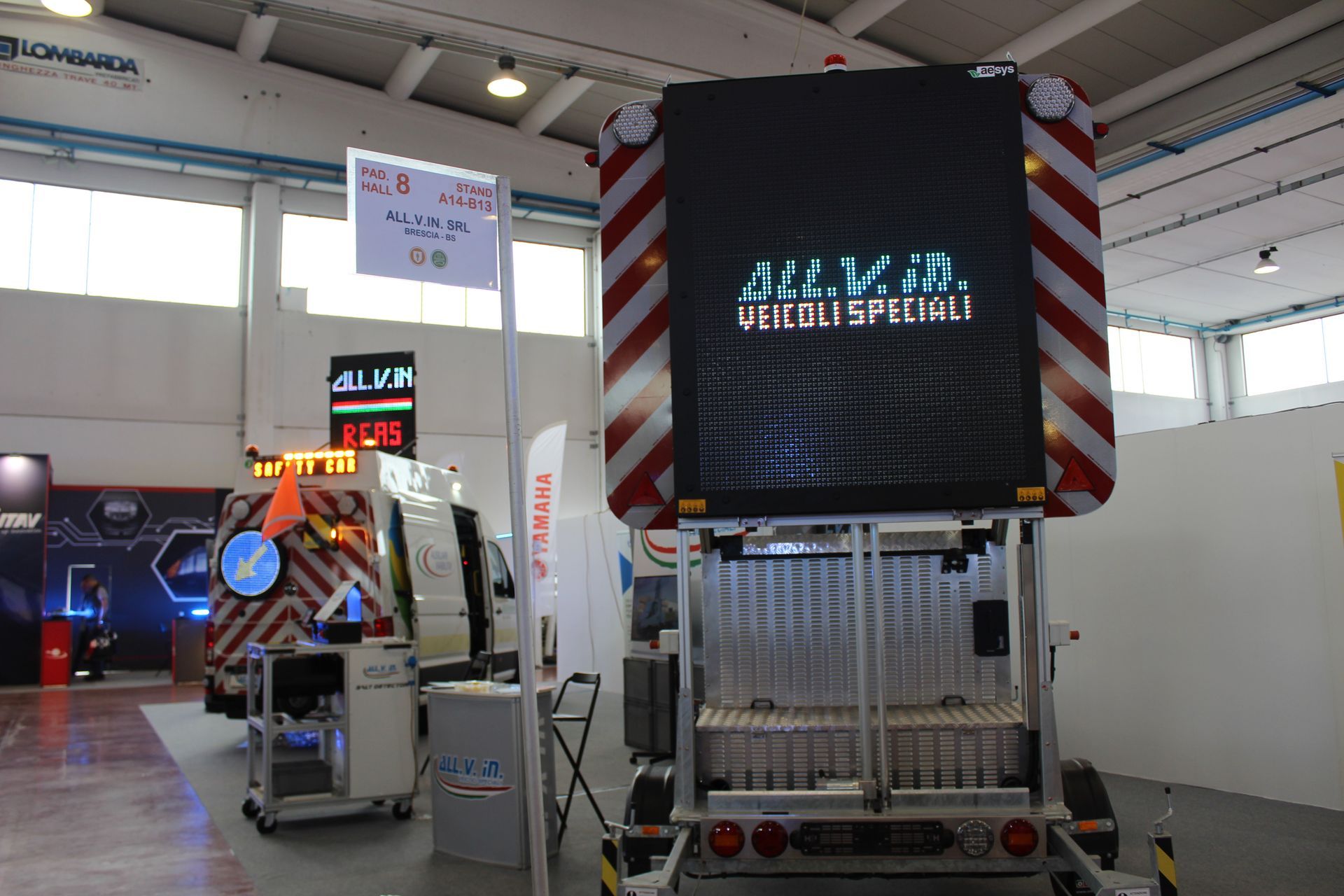
🇬🇧 Our participation in REAS – the International Emergency Exhibition , a key event for the civil protection, rescue and road safety management sectors – has come to an end. The event provided a valuable opportunity to engage with organisations, institutions, partners and industry professionals, confirming the importance of developing technological solutions designed to meet the real needs of those working in critical situations. During the event, we showcased our roadside operational set-ups and presented the Salt Detector system . Designed for the dynamic, real-time measurement of residual salinity on the road surface, the device enables the freezing point of road surfaces to be accurately determined. Integrating this data into preventive maintenance strategies enables road network managers to: Optimise operational resources, moving beyond a reactive approach to maintenance. Raise road safety standards through continuous monitoring. Reduce environmental impact by minimising rock salt consumption and preserving infrastructure. We would like to thank all the professionals, customers and representatives of public bodies whom we met at our stand for their dialogue and for sharing their perspectives on the future of security. We are continuing our research and development work with the aim of providing increasingly integrated, efficient and secure systems to support mobility and emergency response.
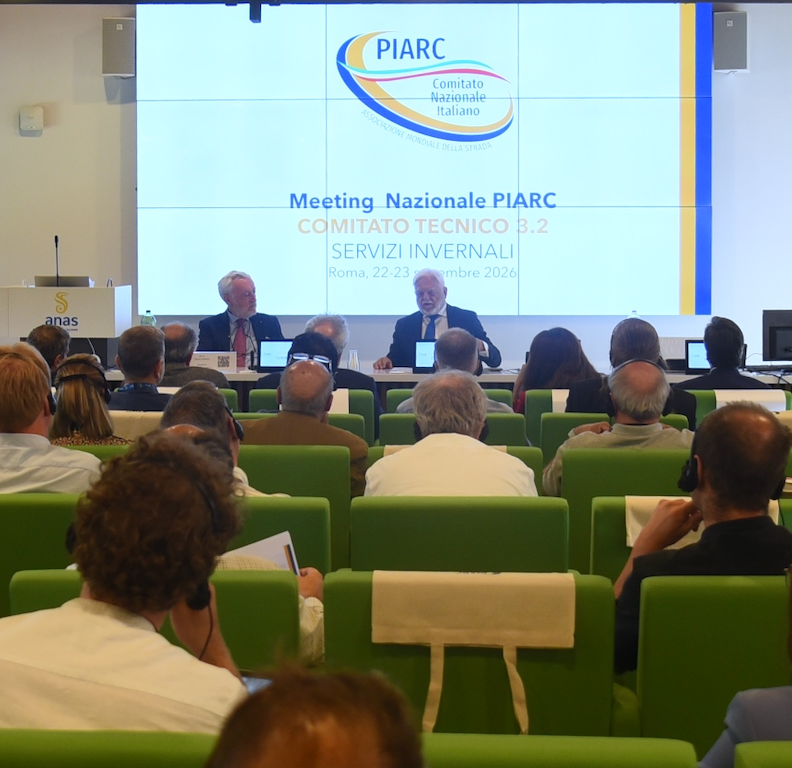
🇬🇧 How much salt is already on the tarmac? What is the exact freezing point of the road surface? Where and when is it really necessary to take action? For those responsible for managing traffic and road safety during the winter season, these are no longer theoretical questions based solely on estimates or general weather forecasts. Today, thanks to technology, these questions are answered with real-time data. On 22 and 23 September, we took part in an event of international significance: the meeting of PIARC Technical Committee 3.2 ‘Winter Services ’, held at the ANAS Smart Road Centre in Rome. The event, chaired by Roberto Mastrangelo (Chair of PIARC Italy’s Technical Committee 3.2), was attended by the association’s international leadership — including PIARC President Emanuela Stocchi , Chair of the International Technical Committee Peter Nutz and Vice-Chair Enzo Giletta — as well as a presentation by ANAS Chief Executive Claudio Andrea Gemme ; last but not least, our Chairman Giovanni Coffinardi , who is also the inventor of the solution, actively participated in the proceedings and was able to present the solution and its benefits to all the representatives of the main institutions and the numerous international experts. For us at All.V.In ., this was an opportunity to demonstrate how technology can drive the evolution of winter road maintenance. Winter road maintenance has always relied on practical experience, good timing and the ability to respond to unforeseen weather events. Today, we want to add a new dimension to this work: enabling the road itself to communicate its conditions in real time. In this context of excellence, we presented the Salt Detector integrated into the mobile road monitoring vehicle developed in collaboration with ANAS. The system measures the salt concentration directly on the road surface and determines its freezing point, transforming road conditions, in real time, into useful information for those carrying out the work. The principle guiding the development of our systems is clear: to provide precise analytical tools for managing road networks in an operational and targeted manner. T he fundamental objective of the salt detector is to optimise resource use, with a view to improving road safety, reducing environmental and infrastructural impact, and keeping maintenance costs down. This approach enables road operators to move beyond a reliance on standardised or blanket measures. The data presented during the event show that targeted management based on dynamic sensor technology can reduce salt consumption by over 30 per cent . This is a key achievement that ensures high safety standards for motorists whilst drastically reducing environmental impact and operating costs. Optimising resources, protecting roads and the environment.

🇬🇧 At the ASECAP Days 2026 in Bratislava , a key event for the European road infrastructure and mobility sector, All.V.In and A35 Brebemi - Aleatica were awarded first prize in the ASECAP Innovation Challenge 2026 for the Rover | Flash LED project . The award recognises a solution developed to support operational safety and improve the management of motorway operations, through an approach that combines technological innovation and practical applicability. Participation in the ASECAP Days provided an important opportunity to discuss the issues driving the sector’s evolution: infrastructure digitalisation, smart network management and operator safety. In this context, All.V.In continues to develop integrated systems designed to transform data and technology into concrete tools to support operational decision-making and infrastructure supervision. The results achieved with Rover | Flash LED confirm the value of collaboration between technological expertise and infrastructure management. The partnership with A35 Brebemi - Aleatica has enabled the development of a solution capable of meeting real operational needs, with the aim of enhancing safety, efficiency and the continuity of operations across the network. The evolution of infrastructure requires solutions that are increasingly connected, intelligent and focused on prevention. All.V.In continues its research and development work with the aim of contributing to the construction of safer, more efficient and sustainable infrastructure, putting innovation at the service of tomorrow’s mobility .

🇬🇧 We will be taking part in ASECAP Days 2026, one of Europe’s leading events dedicated to road infrastructure and mobility, scheduled to take place from 27 to 29 May in Bratislava. This is an important opportunity to discuss key industry issues, such as digitalisation, sustainability and infrastructure development, alongside leading European operators and stakeholders. We are also delighted to announce that we are among the finalists for the ASECAP Innovation Award thanks to the Rover-Flash Led project, developed in collaboration with BreBeMi. We will be there to present it and give you a closer look at its potential. We look forward to seeing you in Bratislava! You’ll find us at Booth 12 Discover the programme
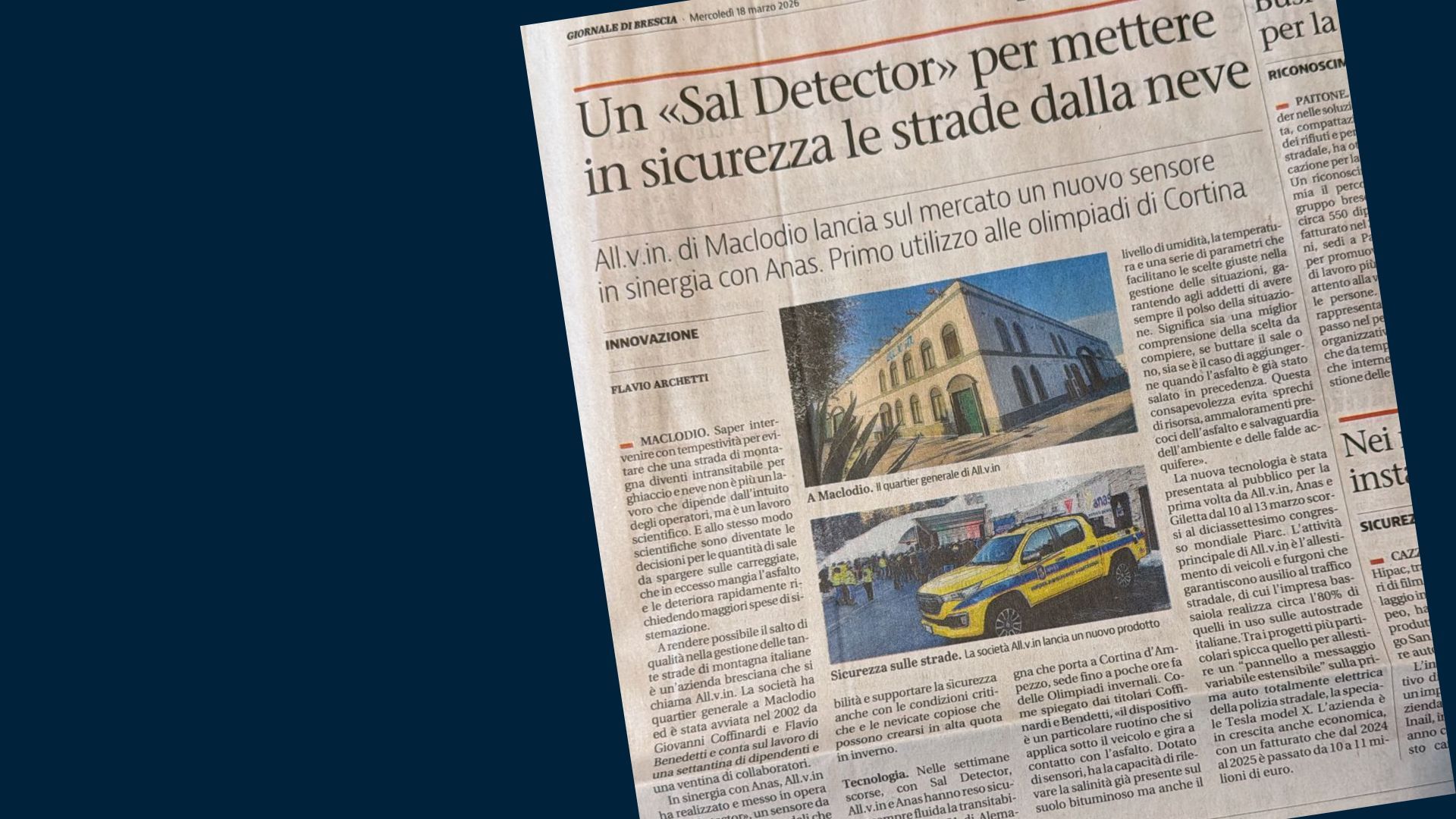
🇬🇧 A ‘Sal Detector’ to keep roads safe from snow All.v.in. of Maclodio launches a new sensor in collaboration with Anas. First use at the Cortina Olympics MACLODIO. Knowing how to intervene promptly to prevent a mountain road from becoming impassable due to ice and snow is no longer a task that relies on the intuition of operators, but a scientific one. Similarly, decisions regarding the quantities of salt to be spread on the carriageways have become scientific; excessive amounts corrode the asphalt and cause rapid deterioration, requiring higher maintenance costs. Making this leap in quality in the management of Italy’s many mountain roads possible is a Brescia-based company called All.v.in. The company is headquartered in Maclodio and was founded in 2002 by Giovanni Coffinardi and Flavio Benedetti; it employs around seventy staff and works with some twenty contractors. In collaboration with Anas, All.v.in has developed and implemented the ‘Sal Detector’, a sensor fitted to road vehicles that detects the salinity of the asphalt to prevent traffic flow issues and support safety, even under critical conditions and heavy snowfall that can occur at high altitudes in winter. Technology. In recent weeks, Sal Detector, All.v.in and Anas have ensured that traffic on the Alemagna SS 51 road – which leads to Cortina d'Ampezzo, the venue for the Winter Olympics until just a few hours ago – remains safe and flowing smoothly. As explained by the owners, Coffinardi and Benedetti, ‘the device is a special wheel that is fitted underneath the vehicle and rotates as it comes into contact with the tarmac. Equipped with sensors, it can detect the salt content already present on the tarmac, as well as humidity levels, temperature and a range of parameters that help make the right decisions in managing situations, ensuring that staff always have a firm grasp of the situation. This means a better understanding of the decision to be made—whether to spread salt or not—and whether it is necessary to add more when the asphalt has already been salted previously. This awareness prevents waste of resources, premature deterioration of the asphalt, and safeguards the environment and groundwater aquifers’. The new technology was unveiled to the public for the first time by All.v.in, Anas and Giletta from 10 to 13 March at the 17th PIARC World Congress. All.v.in’s core business is the fitting out of vehicles and vans designed to assist road traffic management; the Bassano-based company produces around 80% of those in use on Italian motorways. Among the most notable projects is the installation of an ‘extendable variable message sign’ on the traffic police’s first fully electric vehicle, the special Tesla Model X. The company is also growing financially, with turnover rising from €10 million to €11 million between 2024 and 202 5.
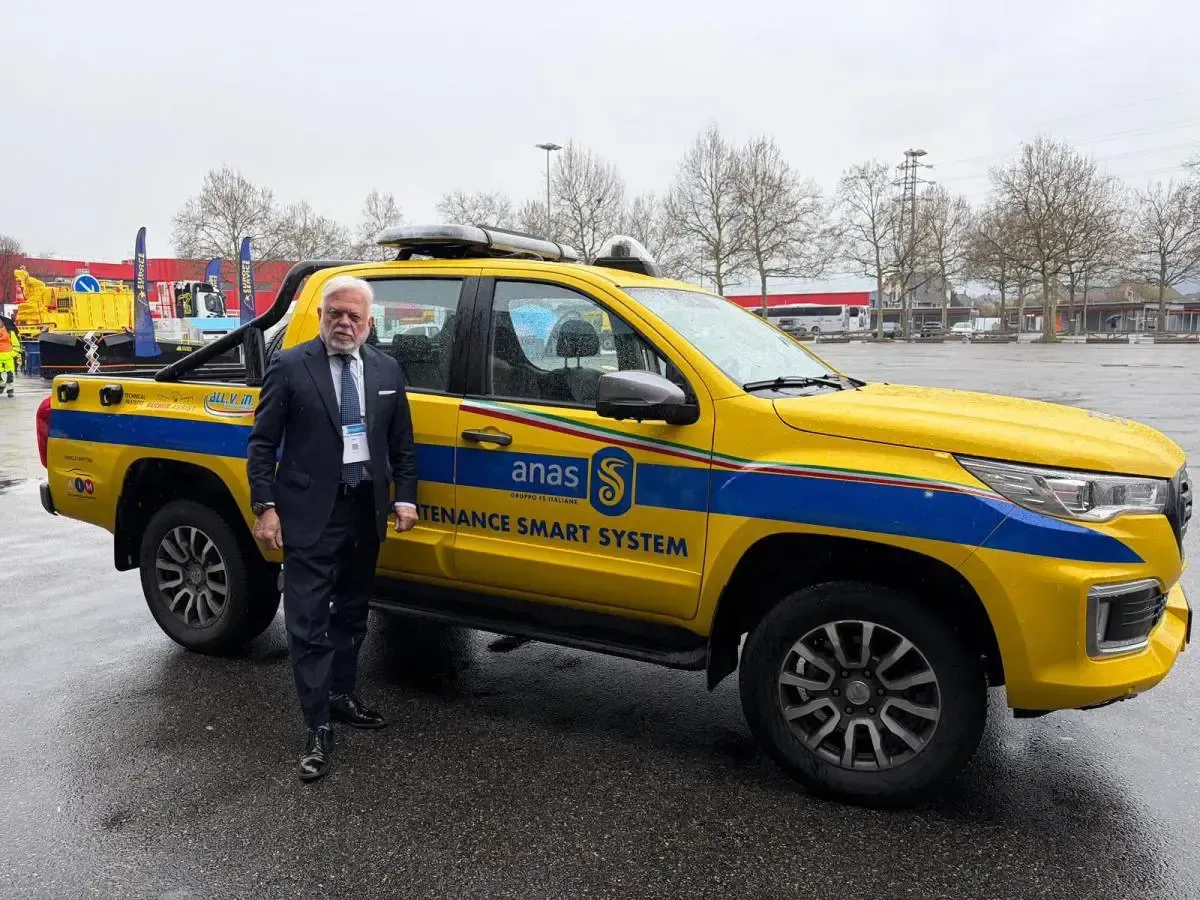
🇬🇧 Anas: a Marshall Plan is needed to make the roads safer. More resources, technology and focus on road safety Anas CEO Claudio Andrea Gemme has launched a strong appeal for massive European financial investment in road infrastructure , comparing it to a modern ‘Marshall Plan’ to make roads safer and more resilient in the face of climate change and growing regulatory demands. The appeal was made on 10 March 2026 in Chambéry, France, during the 17th World Congress on Winter Services , Road Resilience and Decarbonisation organised by the PIARC World Road Association. The event This is the most important international gathering for experts, r oad operators, researchers and public decision-makers who discuss the sector’s challenges in an era marked by extreme weather and technological transition. The congress, which began on 10 March, will continue until 13 March and brings together delegations from around the world. The strategy In his speech, Gemme highlighted the financial challenges faced by Anas, which are shared by other national road authorities : ‘Anas, like all the others, must bear substantial costs to ensure safety, resilience and accessibility.’ He then expressed the hope that the European Commission would allocate adequate resources to road infrastructure , so that it can comply with increasingly stringent European directives on safety and environmental sustainability. Gemme then outlined the concrete efforts made by Anas during recent major events: the preparatory work for the 2025 Jubilee and the 2026 Milan-Cortina Winter Olympics has enabled significant improvements in mobility and inclusivity across various parts of the country. The technical example A concrete example of innovation presented in Chambéry is the specialised vehicle for intelligent winter road management, which was successfully tested on the SS 51 “di Alemagna” during the Olympic Games. It is a pick-up truck equipped with advanced sensors capable of monitoring crucial parameters in real time, such as the temperature of the road surface and the air , the presence of moisture, the status of anti-freeze treatments and the levels of residual salt on the carriageway. The data is transmitted in real time to operations centres and state-of-the-art gritting vehicles, enabling more precise, timely and targeted interventions, with clear savings in resources and increased safety. The future The CEO also highlighted the digitalisation process that Anas has been pursuing for several years: ‘Through predictive maintenance, we have raised our quality and safety standards. We can anticipate any critical situations and plan the necessary interventions.’ Key programmes include Structural Health Monitoring (SHM), which monitors the condition of bridges and viaducts 24 hours a day using sensors, digital road systems to provide real-time information to users, and the development of digital models of road assets for better management of extreme events.
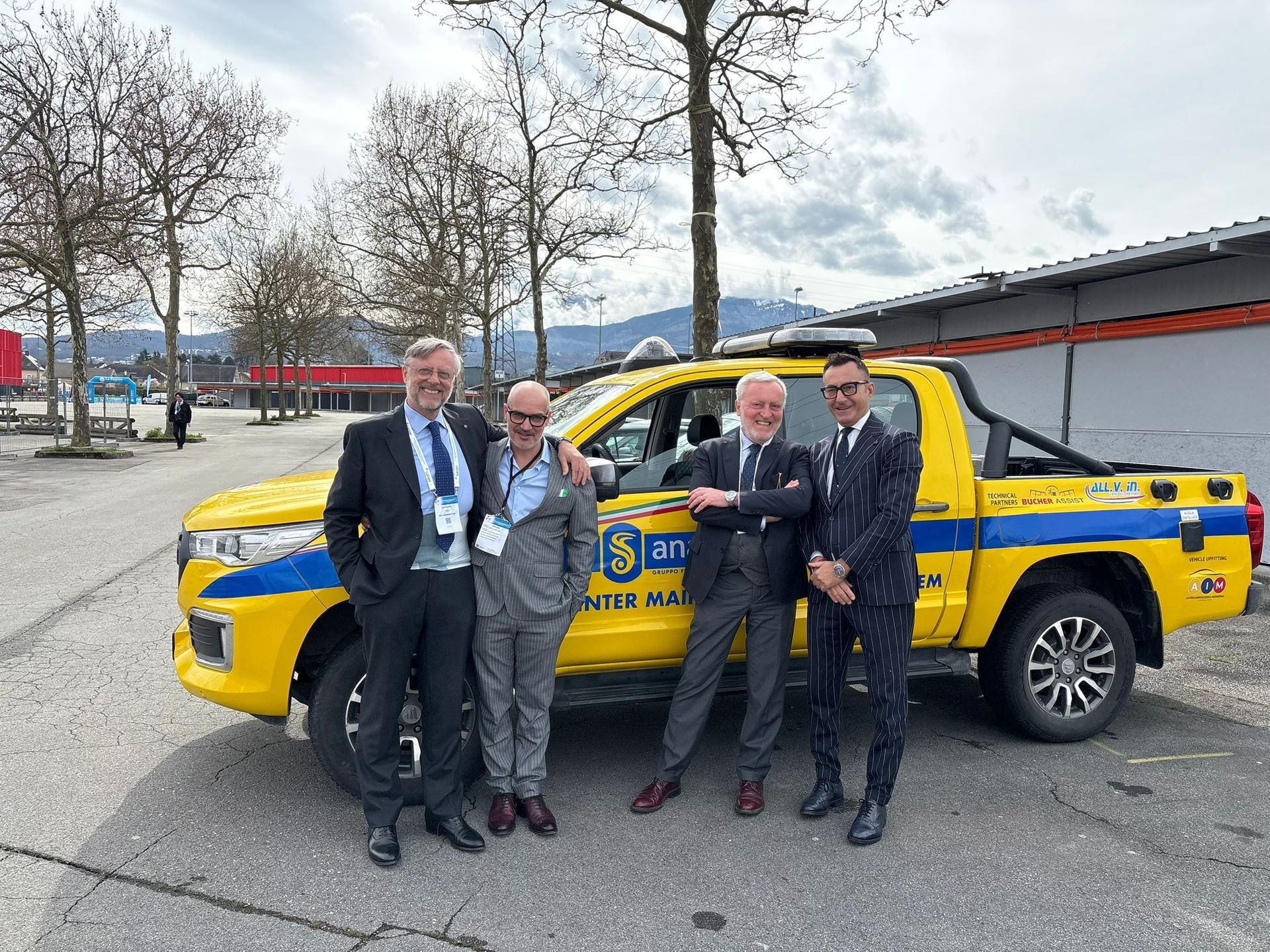
🇬🇧 During the PIARC World Congress, Anas CEO Claudio Andrea Gemme emphasized t he importance of investing in innovation to ensure safer and more resilient roads. Last February, during the Olympic Games, a test site was set up on State Road 51 “Alemagna” using a vehicle equipped with Allvin’s Salt Detector system, designed to measure the concentration of residual salt on the pavement in real time and accurately determine the freezing point of the road surface. The use of real-time data and analytical tools has enabled the optimization of maintenance strategies, with a tangible impact on operational efficiency. Among the most significant results: a significant reduction in salt consumption of over 30% and the maintenance of high safety standards on the roads. These data demonstrate that data-driven operations can improve the effectiveness of interventions, reducing waste and environmental impacts. Allvin is among the companies involved in the development and application of these technologies. Thanks to vehicle-mounted systems, it is possible to measure residual salinity in real time and support more precise operational decisions. This allows for: optimizing interventions reducing salt usage improving the effectiveness of treatments increasing traffic safety Once again, the combination of expertise and technological innovation has resulted in a valuable tool for operators managing winter road maintenance activities Allvin Innovative by Design
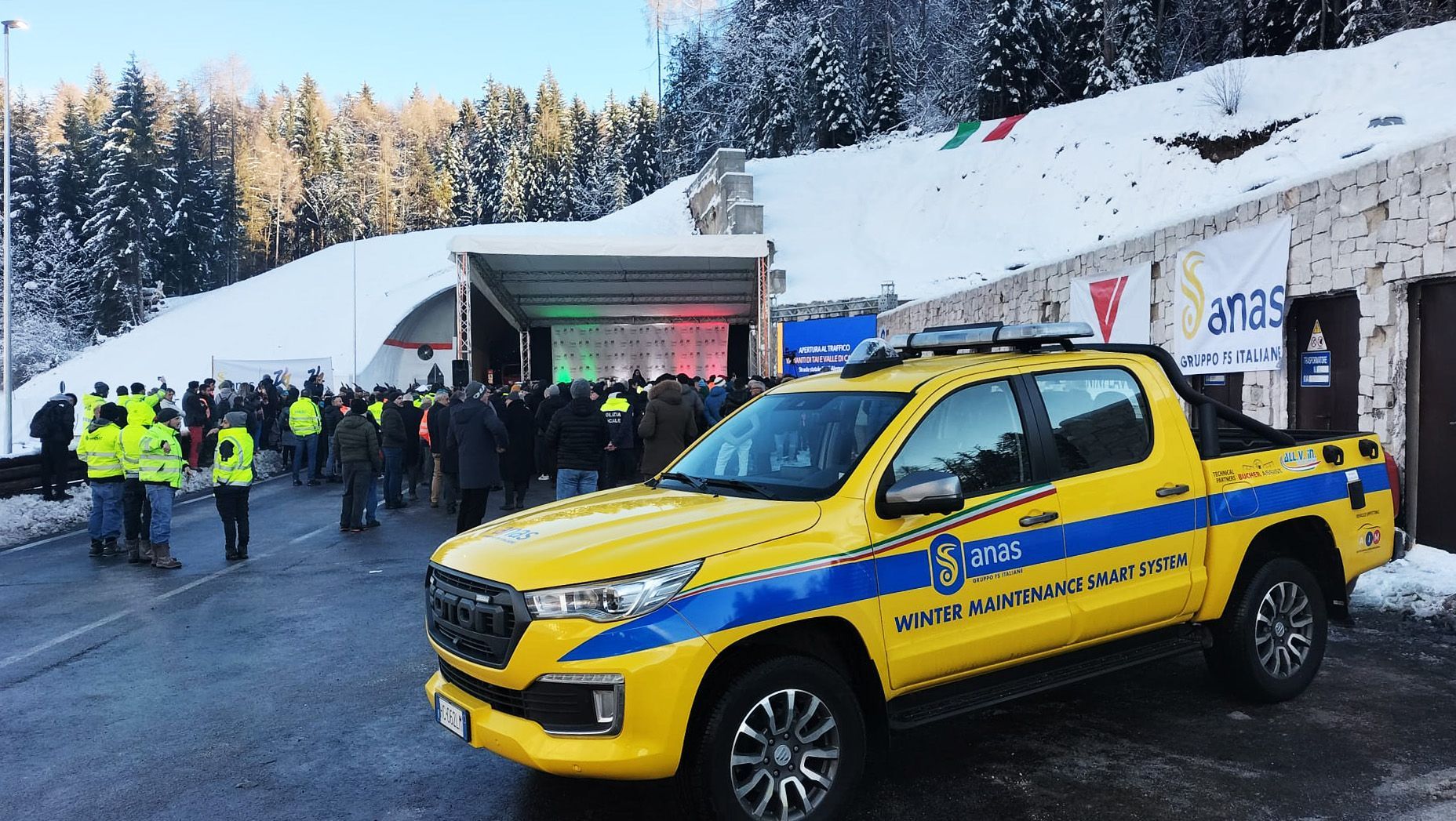
🇬🇧 Following recent snowfall in the Cortina d'Ampezzo area, ANAS launched a trial of advanced winter road safety systems on the SS 51 “Alemagna” road, ahead of the 2026 Milan-Cortina Winter Olympics. The Salt Detector we developed for ANAS is at the technological heart of the trial: a solution designed to measure the concentration of residual salts on the road surface in real time and accurately determine the freezing point of the road surface. Continuous data acquisition enables advanced, data-driven management of anti-icing treatments, allowing the quantities of salt to be accurately calibrated and interventions to be planned according to the actual conditions of the carriageway. With this technology, we confirm our commitment to developing innovative solutions for more efficient, sustainable and safety-oriented winter maintenance, providing concrete support to road operators in their operational decisions. To find out more about the experimentation, look here


